

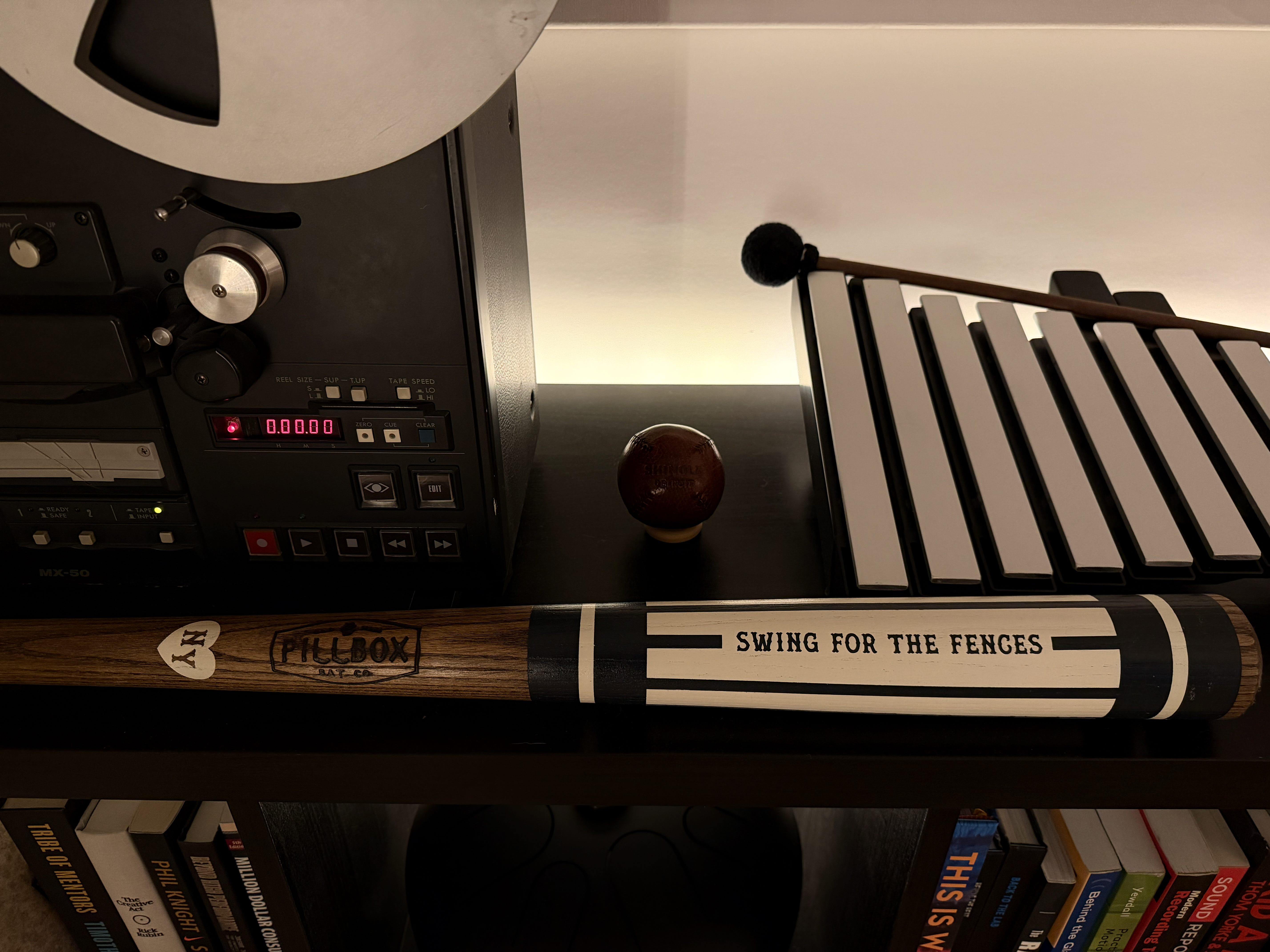
The room is dark except for what comes in under the door.
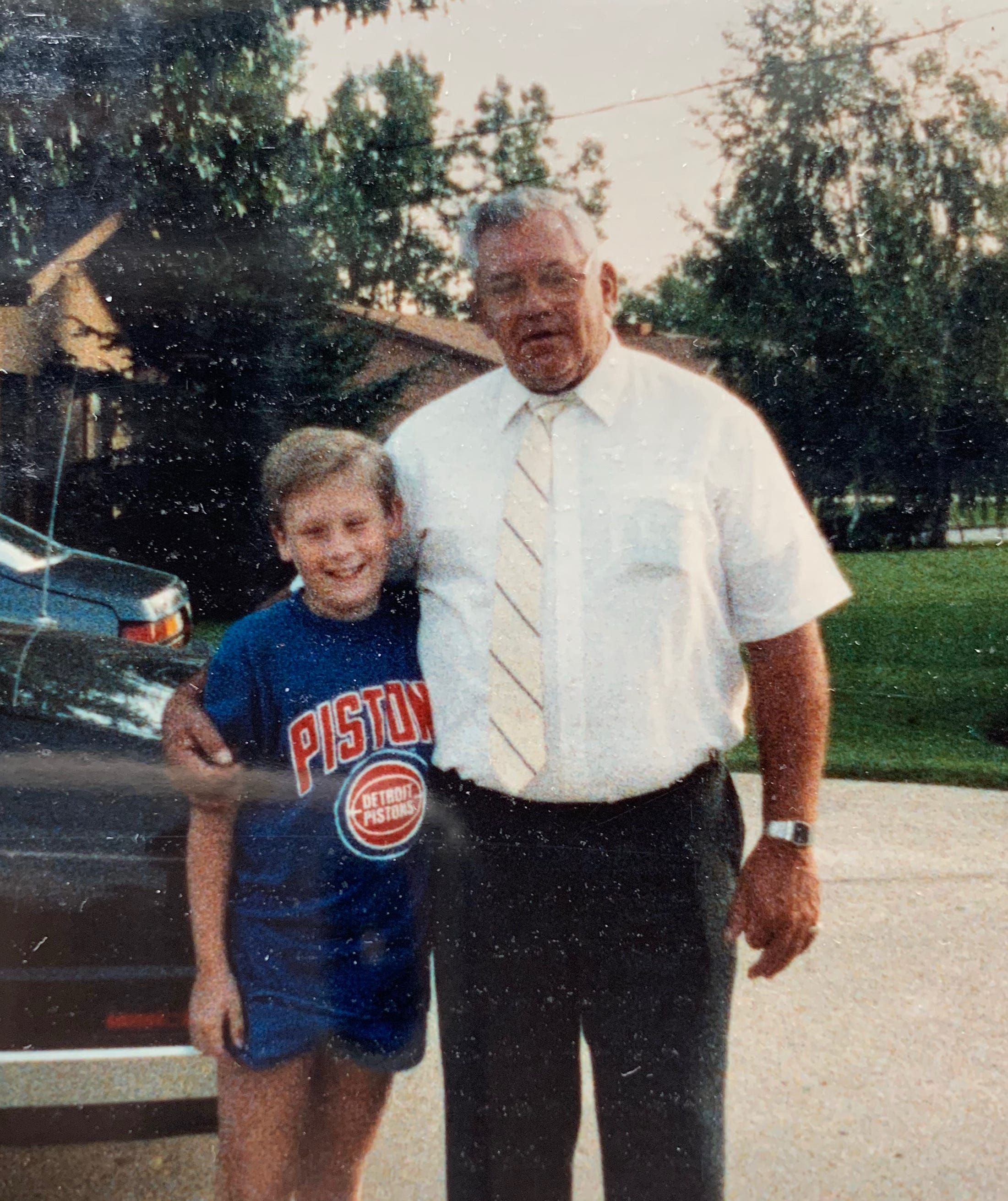
My grandparents had a house on a lake outside Detroit, and the room I slept in was directly across the hall from theirs. By the time those days were done with me, I was done too. There had been tubing on the lake with my uncle, and basketball on the court out back, and poppers and sparklers in the driveway with my cousins, and a slip-and-slide running the length of the hill, and a meaningful portion of one afternoon in which I dressed as the Karate Kid and delivered a crane kick to the punching bag in the basement. Nobody has to talk a kid into sleep after a day like that.
So I was already most of the way gone by the time my grandpa got home late from work, got into bed, and turned on the game.
Tigers. Playing at Michigan and Trumbull, in Tiger Stadium, which they tore down years later and which I did get to see a few games in, though that isn’t the part I kept.
What I kept was the sound of it coming across the hall. The low murmur of a crowd doing nothing in particular. Two men talking, unhurried, about somebody I would never meet. Long stretches where nothing happened at all, and then a crack, and a swell, and then the murmur again, settling back down into itself.
And underneath all of it, my grandfather snoring
That’s the first one. There are others.
Back home in New York, if my parents had to travel for work, I’d stay with my other grandparents, and I’d take a radio into the room with me and find a game. In 1986, I was six years old, the Mets were in the World Series, and I fell asleep to a good bit of it, with no real stake in how it turned out. Two years later, I was watching in a living room when Kirk Gibson came off the bench in Game 1 with a body that had no business being out there and put it in the seats, with Vin Scully calling it on the broadcast. I can still hear the shape of his voice in that moment even now.
And when I got old enough to mention any of this to my dad, he told me about falling asleep as a kid to Jack Buck and Harry Caray (the real one, not Will Ferrell) calling Cardinals games on the radio, hundreds of miles from St. Louis and closer to that ballpark than to anything else in the room. Which is the same story as mine, one generation up, arriving through a different set of speakers.
Here’s the part I love about all of this.
My dad is a diehard Cardinals fan. So was his dad. And on the other side of the family, my mom and both of her parents were Tigers people, which is how a Detroit game came to be playing in that bedroom in the first place.
So there were two traditions, one on each side, both sitting right there and available to me the whole time. And I came out of that house an LA Dodgers kid, and stayed one until high school, when I went to the old Yankee Stadium and watched a rookie shortstop named Derek Jeter play, and that was the end of that. I’ve been a Yankees fan ever since. I watched Jeter and Rivera and that whole run pile up championships and quietly assumed it would always be like that, which is a thing you can only believe once. It’s been a drought since 2009, and I’m now in the phase of fandom where I’m mostly hoping to see one more.
Nobody in my family agrees with anybody about any of this. Two traditions, four teams, no succession plan.
But every single one of us grew up with a game on somewhere in the house. That’s what actually got handed down. Not a franchise, not a cap, not a set of grudges. A sound.
Fast forward to now, and the sound of a baseball game playing anywhere is an automatic moment of zen for me. The wash of the crowd, the announcers working through stats and telling stories about players and occasionally about themselves, the crack of the bat, the roar that comes after. It puts me back in that room across the hall. It makes me feel like a kid, and like it’s summer, and like I’m on vacation with nowhere to be. If it’s a slow Saturday afternoon and I want a short nap, I’ll put a game on. Any game. I don’t need to care who’s playing. It’s the closest thing I know to being wrapped in a weighted blanket.
And I think there’s a reason it works this way, which has to do with what a baseball broadcast actually is.
If you sit and really listen to one, you’ll notice that baseball is more or less the only sport whose sound is mostly nothing happening. It’s three hours of a crowd idling, a couple of guys filling the space with anecdotes about a middle reliever’s changeup or where they had dinner last night, and then the occasional few seconds where something actually occurs. Every other sport’s audio is continuous action, start to finish. Baseball is a noise floor with events in it.
A noise floor. Or, if you’ve been reading this letter for a while, tape hiss. The thing under the thing.
Which brings me to something I read this week that's been sitting with me.
ESPN ran a piece on how much louder ballparks have gotten, and my own team is the case study, because of course it is. The Yankees have added speakers, brought in an in-house DJ, and filled the space between pitches with sound effects and music drops, all of it aimed, in the team’s own words, at filling idle time.
The reasoning came with a number. In Yankees games last season, 17.2 percent of pitches resulted in a ball in play, down from 19.7 percent in 2009. Which means that on the other 83 percent, the organization believes it is losing you to the phone in your pocket, and has decided to win that fight with volume.
Sit with those two numbers, though, because they don’t say what they look like they say. Baseball didn’t become empty. Baseball was always empty. In 2009 it was eighty percent nothing, and last season it was eighty-three percent nothing, and nobody in 2009 thought that called for a DJ. Three points. That is the entire measured difference between a game you could sit inside and a game that apparently needs a soundtrack to hold you.
The game barely moved. What moved was us.
And the players want it, which I didn’t expect. One Yankees infielder said he can barely hear the music in their own building. So I’m not going to sit here and tell them they’re wrong about their own jobs.
But then there’s Louisville.
The Bats, the Reds’ Triple-A club, run a promotion called Nothing Night. No DJ, no walk-up songs, no sound effects, no light shows, no advertisements. A scoreboard showing the score and the count, and an organ. They had one on the schedule this season, and the response was big enough that they added a second.
The players on the field mostly didn’t care for it. One pitcher said you could hear everything, right down to his own dugout chirping the umpire, and that he didn’t like it.
The fans came anyway. Twice. For a night of being asked for nothing.
And then the game ended the way you’d write it if you were making it up. Michael Chavis came off the bench and hit a walk-off grand slam, the loudest thing that can happen in a baseball game, on the one night they had taken away every manufactured way of making something feel loud. The only person with a microphone in the building was the organist.
I want to be careful here, because there’s a version of this letter where I come off as a guy who thinks baseball peaked before he was born and everything since has been a mistake, and that isn’t it.
I love the game. I love the geometry of it and the pace of it and the fact that a season is long enough to have weather in it. I’ve been genuinely, unreasonably invested for almost forty years, and I will be watching the Yankees until they put me in the ground, DJ and all.
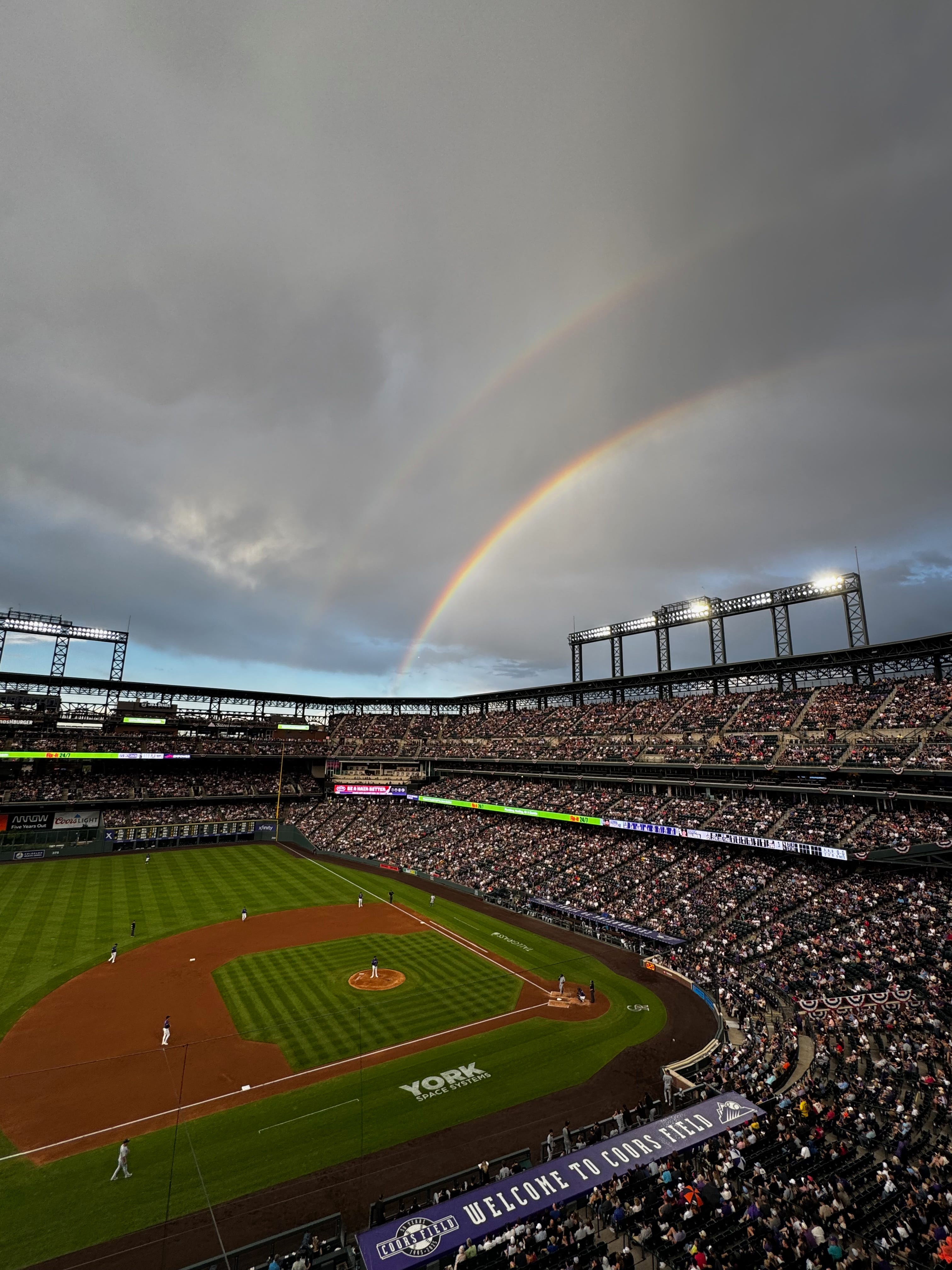
But I know how I got in the door.
I was six years old and asleep, and I wasn’t choosing anything, and the thing that reached me was the part nobody in that house was paying attention to. Not the score. Not the play. Just the hum of it under a closed door, with my grandfather snoring on the other side of the hall.
The game is why I stayed. The sound is why I came.
Picked Up
Two records this issue, doing the same job from opposite directions.
Both of them are, in their own way, artists going back into music that already existed and pulling out what was sitting underneath it. Which is the whole argument of this letter, so I didn’t have much choice.
Kiasmos, II Reworked. Kiasmos is the duo of Ólafur Arnalds and Janus Rasmussen, working in a kind of minimal, patient, orchestral electronic music that never gets in a hurry. This record is a full reimagining of their last album, handed off to other artists, and the way they describe it is better than anything I’d write about it: “There are so many layers within this music, and we were curious to see what might emerge when other artists shone a light on them.”
That’s the thing exactly. Somebody else goes into your finished record, finds the part you’d buried, and turns it up.
Listen: Apple · Tidal · Spotify
Kacey Musgraves, Sounds from the Heart of the Woods. Same instinct, entirely different room. No lyrics anywhere on it. Mostly one undulating acoustic guitar figure with ambient synth underneath, running long enough that you stop clocking where you are in it. Where Kiasmos is orchestral and electronic, this is organic and wooden and close-mic’d, and it does the identical work of filling a space without ever asking you for anything.
Listen: Apple · Tidal · Spotify
Put either one on while you’re working and you’ll get about an hour back.
And if you want to run the actual experiment this letter has been building toward, put one of them on with a baseball game playing behind it. I’m not being cute. Try it.
In the Room
For the past several years, my studio has worked on How Leaders Lead, the podcast hosted by David Novak, former CEO of Yum! Brands, which includes KFC, Pizza Hut, and Taco Bell, and who is also, and I promise this is true, the guy who came up with Cool Ranch Doritos. I’ve heard him tell that story a dozen times and it never stops being funny to me.
The show is David talking with people he knows about leadership, and the guest list is a little absurd. Tom Brady. Deion Sanders. Jamie Dimon. Condoleezza Rice. Peyton Manning. Steve Kerr. Ordinary folks.
A few years back, he also sat down with Rob Manfred, the Commissioner of Baseball, and going back into the archive felt right for this particular issue.
The conversation is about a specific kind of problem: what you do when every available decision will make somebody unhappy. Manfred is managing thirty owners, the players, the union, and several million fans who all want different things and aren't shy about it, and the episode is really about how he looks for common ground when there obviously isn’t any. David’s take is that finding common ground is the skill that shows up in nearly every leader he respects, and that you don’t have to care about baseball to get something out of watching somebody do it well.
Which, having just spent a thousand words on a sport arguing with itself about how loud a building should be, feels about right.
Sent Out
Two weeks, one assignment, and this one asks almost nothing of you.
Put a baseball game on.
I don’t care whether you like baseball. I’d honestly prefer it if you didn’t. Any teams, any game, no stake whatsoever in how it comes out. Put it on low, or in the other room, while you cook or work or fold something, and then leave it completely alone.
Don’t watch it. Not watching it is the entire assignment.
Give it twenty minutes and then notice what the room feels like. Whether the murmur did anything to you. Whether you caught yourself waiting, without having decided to, for the crack.
Then hit reply and tell me whether it worked or whether it did nothing at all. I read every one, and I want the honest answer, including from those of you who are about to inform me that baseball is boring, which is a thing I have heard before, and which I’d like to gently point out is the whole point.
Chad
p.s. — One more thing about that 2020 season, the COVID one, when fans weren’t allowed into the parks at all and the games got played in front of nobody.
If you were casting around for something to fill the hours that summer, the way most of us were, and you landed on a ballgame at some point, you might remember that the broadcasts had fake crowds in them. And you might not. There was a lot going on. Either way, the part I didn’t know until recently is where that sound actually went.
All thirty clubs piped recorded fan noise into the ballparks themselves. Not only into the broadcast feed for those of us at home. Into the stadium. Into the open air of an empty building, where the players were standing.
They could have left the buildings silent and mixed the crowd in later, for television, and nobody watching would have known the difference. They put it in the room instead.
Which tells you what that sound was actually holding up. It was never decoration on top of the game. It was the floor the game was standing on, and the moment it was gone, everyone involved discovered they couldn’t work without it.
The hiss was load-bearing the whole time.