
Tape Hiss: The Second Listen
On two questions, one conversation, and finally playing the tape back.

There’s a conversation I’ve been carrying around for thirty years, and I can still hear every word of it.
I was a freshman or sophomore in high school, standing in a hot, humid church with a woman from our congregation. She was kind. I want that on the record, because she stays kind for this entire story. She asked me what I wanted to be when I grew up, and I lit up and handed her the whole plan: music. Playing it, recording it, living somewhere inside of it. I’d been at a piano since before I could spell, taught myself guitar, played in various churches and bands, and had recently discovered (through some creatively licensed copies of Acid Pro and Fruity Loops... real ones know) that you could build entire songs inside a computer. I could not envision a life that didn’t have all of that at the center.
She smiled and said, “That’s nice. But what are you going to do for money?”
Record screech.
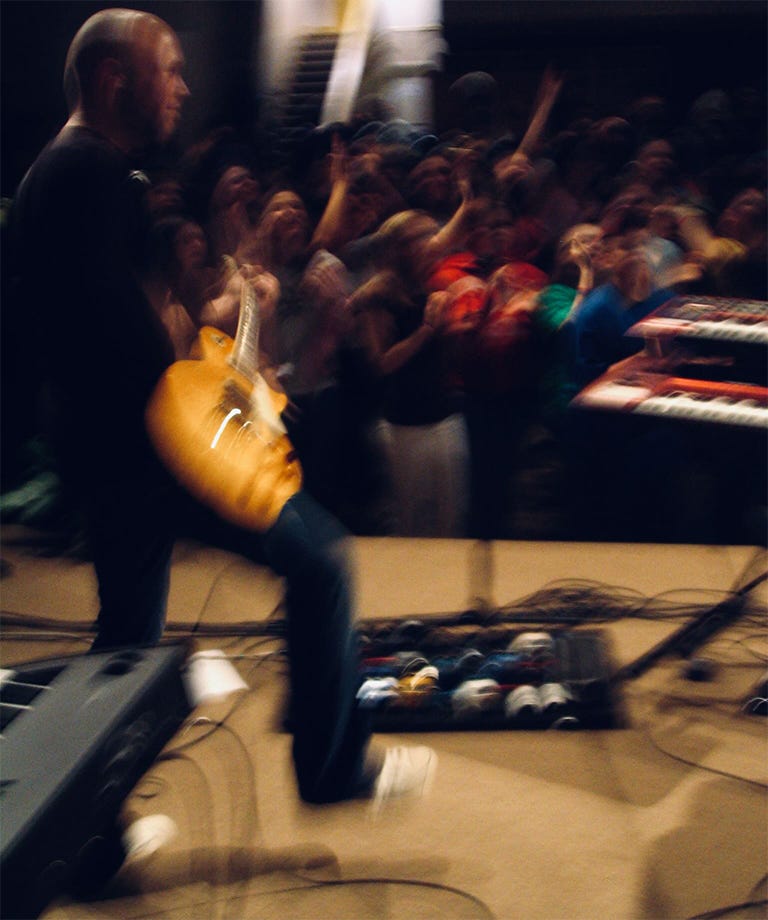
I wish I could tell you I shook it off in the parking lot. Instead, I spent my twenties and thirties answering her second question. I still found my way into studios, still got to produce some things, but somewhere in there I quietly stopped calling myself a musician. The guitars went first. Then the amps and the pedals. A couple of keyboards found new friends on eBay. When I met new people, the old aspirations didn’t come up, because I’d filed them under silly. Life moved on, and one way or another, I moved on with it.
And look, I’m genuinely grateful for how it unfolded. Cool work, great people, bills paid. But there was always a low “what if” running underneath the good years, quiet and constant, sitting just beneath the surface of everything. (Longtime readers of this letter know exactly what that sound is called.)
Here’s the thing about the job I ended up doing for a living, the one that did, in fact, pay the bills. It is re-listening. I go back over the same stretch of audio ten, twenty, fifty times, and every pass turns up something the last one missed: a breath before a sentence, a shift in the room tone, one syllable sitting a decibel too hot. The entire craft is the second listen.
And a few years ago, it occurred to me that in all that time, I had never once gone back and replayed the tape of that conversation in the church.
So I did. Same room. Same heat. Same kind woman. Except this time I let the tape run from the top, and heard what I’d been listening past for twenty-some years: she asked me two questions that day. I built two decades around the second one, the one about money, the one that made a teenager question whether his identity was affordable. But the first question was still sitting right there on the recording, exactly where she left it.
What do you want to be when you grow up?
It’s the most ordinary question in the world. Every adult asks it. Chris Farley built one of the most famous characters in SNL history out of bellowing a version of it at terrified teenagers. And it turns out it’s also the better question by a mile, because “when you grow up” has no expiration date printed on it anywhere. I checked.
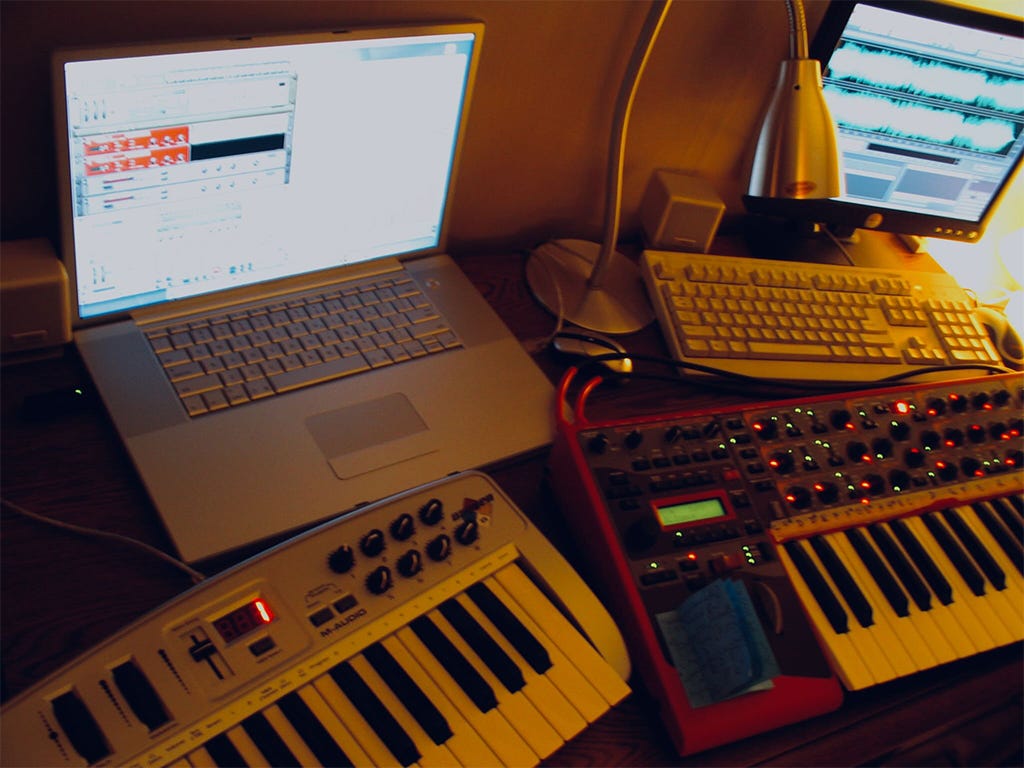
So I started answering it. I rebuilt the studio, and this time I built it for my clients and for me in the same room. Guitars hang on the walls again. The pedalboard is overflowing. There’s a tube amp tucked under a shelf, and analog synths that light up like a Christmas tree every time I flip them on, and somewhere in me, a fifteen-year-old grins every single time. Do I want to front a band and haul gear around the country playing shows? HELL NO. But I’m writing music again. Some of it for myself, some of it for a new podcast project. Some for an indie film I’ve been tapped to score. All of it because I finally heard the question that had been on the tape the whole time.
I’m still growing up. So, for the record, are you.
If someone forwarded this to you and it sounds like your kind of thing, you can get the next one in your inbox, every other week.
Picked Up
I’ve had the new Thundercat record, Distracted, running through my speakers since it dropped this spring, and I’m nowhere near done with it. It’s his first album in six years, and it’s stacked with friends: Tame Impala, A$AP Rocky, Lil Yachty, Channel Tres, and a posthumous Mac Miller verse on “She Knows Too Much” (love and miss you, Mac). But the track I keep circling back to is “ThunderWave,” his duet with WILLOW.
Anyone who’s talked music with me in the past year knows how hard I fell for WILLOW’s 2024 album empathogen, so hearing her voice braided into Thundercat’s falsetto over that flanged, underwater bass felt like two of my favorite working musicians finding each other on purpose.
This issue, I’m handing you two things to watch instead of one thing to hear.
First, the live performance video of “ThunderWave.” Thundercat on bass, WILLOW on guitar, and a bass solo you won’t find on the album version. Watch his hands and try to keep up.
Second, WILLOW's NPR Tiny Desk concert from a couple of years back. I've watched it more times than I can reasonably defend, and I still can't get over how tight that band sounds in a room the size of the name. There are a lot of great Tiny Desk performances. This one stays at the top of my list.
In the Room
For five years now, my studio has worked with the team at A Kids Co., the publisher behind the “A Kids Book About...” series, making books and podcasts that take kids seriously on the topics most grownups tiptoe around (racism, grief, money, all of it). Their parenting podcast, Raising Us, picked up an Ambies nomination and a Webby honoree nod along the way, and it’s one of those long partnerships where the trust is built into the workflow by now. We recently mixed an episode called “Raising Confident Kids Without Pressure or Perfection,” a conversation hosted by Elise Hu with Nia Sioux and Dr. Kristin Neff, whose research on self-compassion has quietly reshaped how a lot of parents talk to their kids (and to themselves).
We only mixed this one, no editing, which is its own quiet discipline. The conversation was already there. Our job was to make sure nothing got between it and you.
Here’s why it belongs in this particular letter. I just told you a story about what one offhand sentence from a well-meaning adult did to a kid’s sense of what he was allowed to become. Then I mixed a conversation where Nia Sioux describes being labeled the weak link on national television at nine years old, and the years she’s spent taking that label back (her new memoir is titled Bottom of the Pyramid, which tells you exactly how she chose to take it back). And Dr. Neff spends her half of the episode explaining what I wish someone had told the kid in that church: a person’s worth was never supposed to hinge on the outcome. At one point she even says that music can carry that message when words can’t quite reach. I mixed this one, but honestly, I also needed to hear it.
Sent Out
You knew this was coming.
What did you want to be when you grew up? The kid answer. The one you gave before anyone brought up money.
And then the harder half: what’s the version of that answer still available to you, right now, at whatever age you’re currently doing your growing up? It probably doesn’t look like the original. Mine sure doesn’t. But I’d bet there’s a version of it sitting closer than you think, a tape you haven’t played back in years.
Hit reply and tell me both halves. I read every one.
Chad
p.s. — One more thing about Matt Foley, because when I learned this, I had to sit down.
You know the character even if you’ve never known the name: Chris Farley on SNL, the sweaty, hollering motivational speaker warning teenagers that they’ll wind up eating a steady diet of government cheese and living in a van down by the river. It’s regularly called one of the best sketches the show ever aired.
Farley named him after a real person. Matt Foley was his rugby teammate at Marquette; they met at practice in 1982 and stayed close for the rest of Farley’s life. And the real Matt Foley grew up to become a Catholic priest. He served tours in Afghanistan as an Army chaplain, pastored parishes in Chicago, and walked with Farley through the fame and the addiction underneath it. When Farley died in 1997, it was Father Matt Foley who presided over his funeral.
The loudest version of the question in American culture, the guy screaming at kids about what they’re going to do with their lives, was named for a quiet man of the church who spent his whole life asking it gently.
This letter started in a church, with a question. It felt right to end in one.