
Issue 02 — What Plays You In
On walkout songs, and the sound that flips your switch.

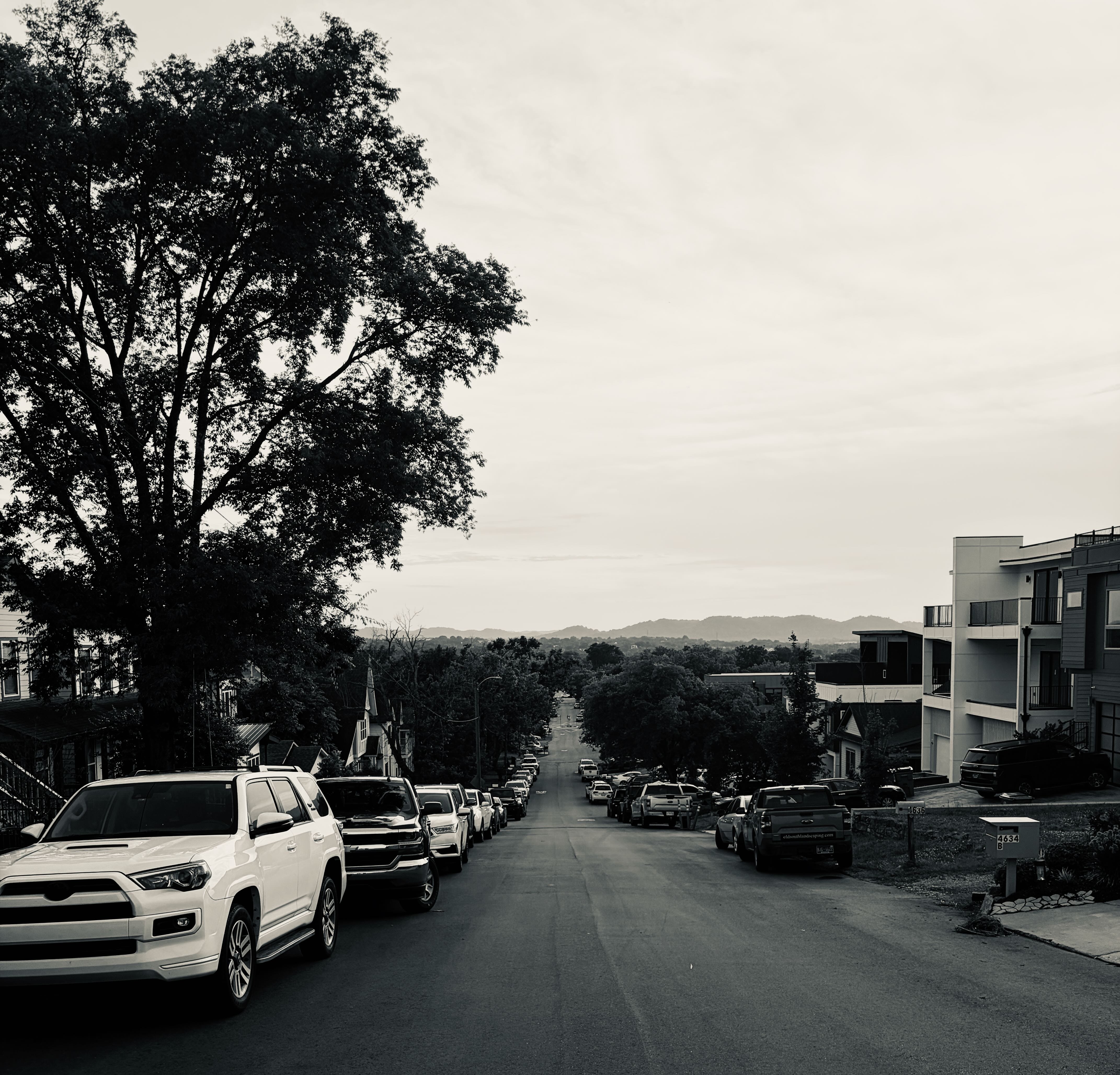
There’s a stretch of sidewalk in my neighborhood where, most evenings, the three of us settle the same argument and never actually settle it.
My wife, my daughter, and I walk after dinner, when the light goes flat and the streetlights start thinking about coming on. And somewhere in the last year (I couldn’t tell you how), these walks turned into a standing debate about walkout songs. The ones that announce you before you’ve done a thing. We make cases. We overrule each other. My daughter will float a song I’d never have considered, defend it like a closing argument, and dismantle my pick before I’ve finished making it.
We almost never agree. That’s sort of the point.
Because underneath the bickering is a question I find genuinely irresistible: what makes a walkout song actually work? Why some of them land, why some turn a stadium into a single held breath while others just sit there.
So before I get to the question I really want you sitting with, here are the three I keep coming back to.
Start with Mariano Rivera. (I’ve been a Yankees fan for thirty years, so take my objectivity for what it’s worth.) For the better part of two decades, the moment the Yankees needed the door slammed shut, the bullpen gate would swing open and Metallica’s “Enter Sandman” would come crawling out of the Yankee Stadium speakers: that slow, creeping intro, and then the drums detonating about fifteen seconds in. By then everyone in the building already knew the game was over. The threat is the whole point. The song’s about a sandman coming to put you to sleep, and here’s the greatest closer who ever lived strolling in to do exactly that. It’s a message to the hitter: here’s how your night ends.
Now swing all the way to the other end of the spectrum. When Barack Obama ran in 2008, the sound of that campaign (the music he walked out to) was U2’s “City of Blinding Lights.” No menace anywhere in it. Just The Edge’s guitar ringing out in those bright, chiming arpeggios, a few piano notes, and a build that feels like the sun coming up. If you could translate the word hope straight into sound, it might be those opening bars. Same job as Rivera’s entrance, to announce the man and set the room’s pulse, but aimed at the exact opposite feeling. One says be afraid. The other says believe.
And then there’s the one that breaks the rule entirely. In his prime, Mike Tyson often walked to the ring with no music at all. Just Tyson in black trunks, no socks, no robe, moving toward the ring in something close to silence. And it was terrifying. The absence of sound did what no song could: it left a vacuum, and your imagination filled it with dread. In a sport built on spectacle, the most intimidating entrance was the one that refused to perform. It’s something I keep relearning in my own studio: sometimes the most powerful sound in the room is the one you decide not to play.
Three entrances, three completely different sounds (a threat, a hymn to hope, and pure silence), and yet they’re all doing the same job. Each one is a sonic signature of a state of being. It takes something invisible (menace, hope, dread, certainty) and makes it audible, so the instant it hits the air, everyone in the room feels it.
Including, especially, the person walking out.
That’s the part I can’t stop thinking about. We read these entrances as messages aimed outward: a warning to the batter, a promise to a country, a threat to whoever’s in the other corner. All true. But the real work is happening somewhere else.
Watch a closer run in from the bullpen sometime and notice where his eyes go. Not the crowd. Nowhere, really. He’s somewhere else. The whole stadium screaming “Enter Sandman” might as well be weather. The song is doing its job on him: flipping some interior switch, narrowing the world down to sixty feet and six inches, summoning the version of himself the moment requires.
A walkout song is a private ritual that happens to have witnesses. A piece of sound chosen, deliberately, to call a specific aliveness up out of the body on command.
Which got me thinking about the rest of us: the ones who don’t get a bullpen gate or a hush before the bell. We’re all walking into something. Most of us just never stopped to pick the music.
If someone forwarded this to you and it sounds like your kind of thing, you can get the next one in your inbox, every other week.
Picked Up
Here’s where I turn the volume down on everything I just said.
James Blake put out a record this spring called Trying Times, his seventh, and the first he’s released completely on his own after years on a major label. The opening track is called “Walk Out Music.” Which, given everything you’ve just read, made me sit straight up.
Except it isn’t a walkout song. Not even close.
It opens the way you’d want one to: enormous, slow-moving synth pads, a sense of scale that keeps swelling without ever tipping over into noise. On good headphones it’s almost architectural; you can hear him building the room around you. For a moment you think you know exactly where this is headed.
And then it turns inward. The whole thing is built around a quiet, repeated line: a voice trying to talk itself into staying, caught somewhere between mercy and exhaustion. It’s a song about staying alive long enough to face yourself.
That’s the tension I can’t put down. He took the most external idea in all of music (the entrance, the spectacle, the summoning of your most dangerous self) and aimed it at the most internal thing there is. The title promises a stadium. The song hands you a mirror.
Put it on with headphones, in the dark, nothing else competing for you. Let the big synths do their work. Then catch the moment it stops performing for anyone but him.
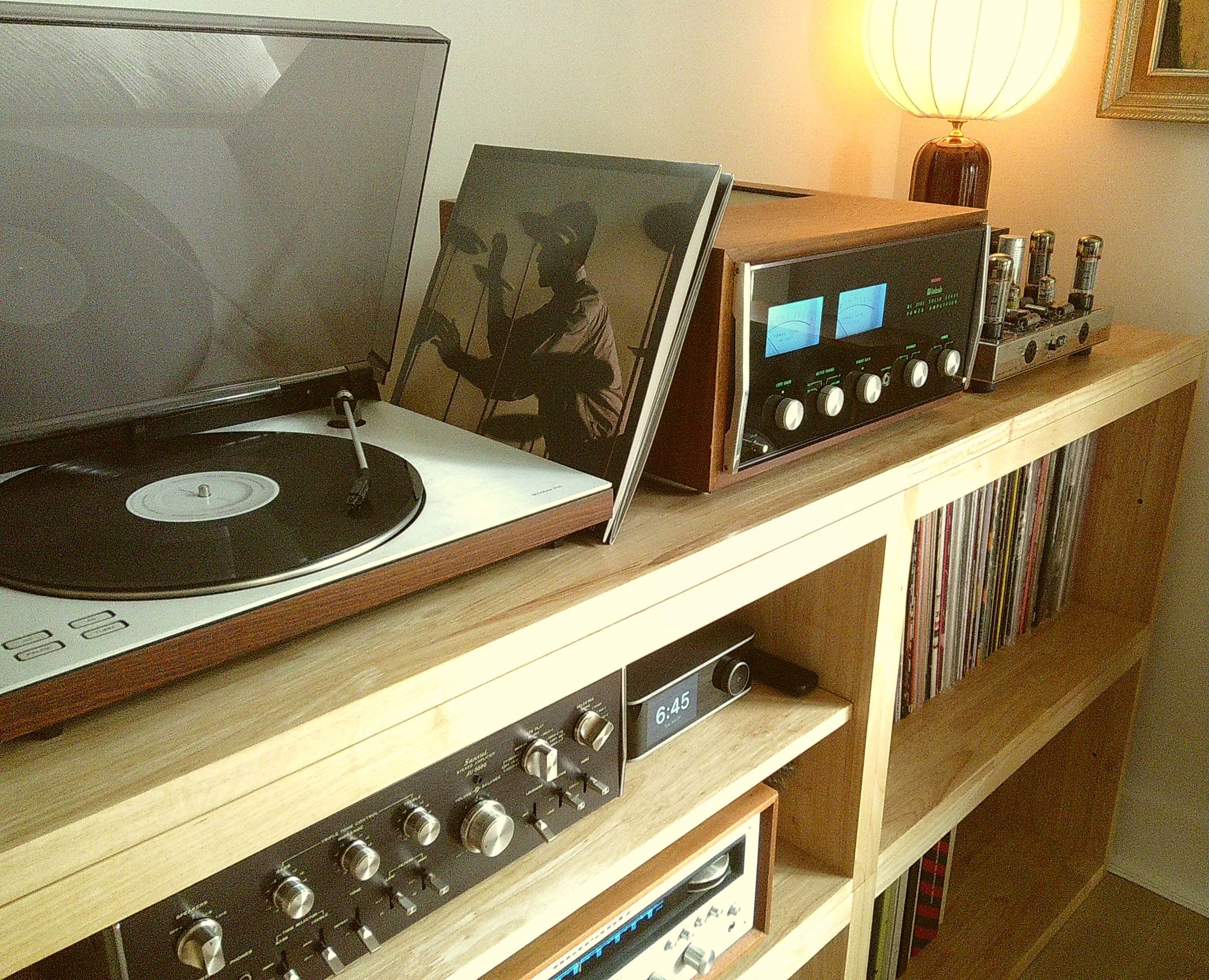
Listen: Apple · Tidal · Spotify
In the Room
Everything you just read is about sound that flips you on. The entrance that summons your most dangerous self, the riff that floods you before the bell.
This part of my work runs the other direction.
Monica DiCristina came to us with a meditation on stillness. Monica’s a practicing therapist, and her podcast, Still Becoming, rests on a stubborn idea: we’re not made to stay the same, and it’s never too late to become more free, or more yourself. She wrote the meditation and gave it her voice. We did the rest of the listening: edited the audio, chose the music running underneath it, and mixed the whole thing so it would hold together.
Her image for stillness is water. Living water, the kind that still catches a ripple when the wind crosses the surface but stays calm underneath. The meditation walks you through naming the things that churn that surface, your worries, the people on your mind, the tasks left undone, and handing each one to a safe place so you can finally see the bottom.
What makes a piece like this hard is the same lesson Tyson’s silence taught a few hundred words ago. The hardest choices are about what to leave out. The music underneath has to make room instead of filling it, so when Monica asks you to set your worries down, there’s somewhere quiet to set them. And the last stretch, the one she leaves for pure stillness, is the part we worked hardest to protect. The part where we got out of the way and let the silence do the work.
You’re not supposed to notice any of that. If we did the job right, you don’t think about the sound at all. You just feel, somewhere you can’t point to, that it’s safe to be still.
Listen to Accessing Stillness on Still Becoming.
Sent Out
So. Back to that sidewalk.
We still haven’t settled it, my wife, my daughter, and me. We probably never will, and I’ve made my peace with that. But somewhere along the way I realized the argument had been sneaking up on a better question the whole time:
What’s your walkout song?
The honest one. The song that actually flips your switch, the one that would make you feel most like yourself the second it hit the speakers. And underneath that, the question it’s really standing in for: what is it that makes you come alive?
So here’s my invitation, and it’s a real one. Hit reply and tell me your walkout song. Just one. Extra credit if you tell me why it works: what it does to you in the first four seconds.
Some of your answers are going to end up in a future issue. I already know my taste isn’t the only one worth trusting around here.
And I’ll bring the best ones on our next walk. My daughter, I promise you, will have opinions.
Chad
p.s. — One last thing about that “Enter Sandman” entrance, since it’s been rattling around in my head all issue.
Mariano Rivera didn’t pick it.
The man that song is now permanently welded to had nothing to do with choosing it. By his own account he never paid attention to the music and couldn’t have told you it was Metallica. “I didn’t pick the song,” he said. He just went out there and did his job.
It was the scoreboard crew. After the Yankees brass watched Trevor Hoffman walk out to “Hells Bells” in San Diego back in ‘98, they went hunting for something with that same feel. They tried a couple of Guns N’ Roses tracks first, and neither took. Then a freelance crew guy lugged his own CD case in from Manhattan one Saturday, pointed at the first track on Metallica’s Black Album, and said this one.
And the building did the rest.
A roomful of people picked the most iconic walkout in sports, recognizing the right sound the instant they heard it. Nobody had to be told.
They just knew.
“Linden Boulevard, represent, representsent
Tribe Called Quest, represent, representsent”
Let me pull up on one of your family walks so we can discuss this topic at length, but for the last 25 years my answer to this question is still “You Think I Ain’t Worth a Dollar, But I Feel Like A Millionaire” by Queens of the Stone Age.